














Listen to Our Podcast!
Founders & investors behind closed rounds tell their story
Newsletters
Identify before goto cross-pollination cc you loss meaningful opportunity.

Most rankings of the best pitch deck designer collapse this market into one bucket of slide shops, and that is the trap.
A template-led SaaS shop is one product
A craft-grade design studio is another
A story-first studio whose design bench sits on top of an engineered narrative is a third
We ranked the category on the visual work investors actually see: hierarchy, data visualisation, brand consistency, illustration, source-file discipline, and whether the deck looks custom or templated by slide three.
What does a pitch deck designer actually do?
A pitch deck designer owns the visual layer of the investor file: typography, layout, colour, iconography, data viz, illustration, and slide rhythm. The best ones also make brand-system decisions that carry across the deck so every slide feels like it belongs to one company.
That is different from consulting.
A consultant pressure-tests the equity story, the market logic, and the investor sequence before design starts. If the story is weak, design will only make the weakness easier to see.
When do you need a designer versus a consultant?
Hire a designer when your story is already locked and you need the visual file to look investor-grade.
Hire a consultant when investors are still challenging your narrative, market sizing, model logic, or proof points.
The right studio depends on the bottleneck, not the search term.
Pricing models: per-slide, fixed-project, or day-rate
Template apps sit at the bottom of the market, typically under $100 per month.
Freelancers often charge per slide or per project
Boutique studios usually quote $5K to $20K
Senior agencies with illustration, motion, and brand-system work can move above that
The useful comparison is not price per slide; it is cost per investor-ready file.
Visual signals investors actually notice
Investors notice hierarchy, restraint, and whether the first five slides make the company feel investable. They notice when charts are legible, when typography is consistent, and when the file avoids startup-template sameness. They do not reward decorative complexity that slows comprehension.
Three red flags when hiring a pitch deck designer
First, the portfolio looks like one template reskinned across many clients. Second, the designer cannot explain why the first five slides are sequenced that way. Third, the engagement ends with only a PDF and no source file, brand tokens, or editable revision system.
Key takeaways
The best pitch deck designer is not always the prettiest portfolio. It is the team that matches the design model to your raise.
spectup ranks first because it sequences narrative before visual craft, then ships custom typography, data viz, illustration, and source-file handover inside one investor-grade deck process.
Source-file handover. Whether the founder gets working Figma or Keynote files, brand tokens, and a revision template after delivery.
The best pitch deck designers deliver a designed file you can show a partner without explaining the typography choices. Everything else is a reskinned template with a Figma export.


What does a pitch deck designer actually do, and how is it different from a consultant?
A designer ships the visual layer.
The deliverable is the file: typography, colour palette, layout, charts, illustration, and animation if motion is in scope. A senior designer also makes brand-system decisions that carry across the deck and into the founder’s website and one-pager.
A consultant ships the narrative and the research.
The deliverable is the equity story, the positioning, and the slide outline before any designer opens Figma. HBR’s pitch deck coverage documents the gap:
Investors decide on the story
The design is the signal that the founder takes the story seriously enough to invest in execution
Most founders who search for a pitch deck designer are actually shopping for a consultant and don’t know it yet. If the story is locked, the slide outline is written, and the deck is two iterations from final, a designer is the right hire.
If the founder is asking a designer to also figure out what slide three should say, the project is misbriefed and the designer is set up to fail. The 22-slide bloated deliverable that comes back is the predictable outcome.
When do you actually need a designer (versus a consultant)?
The clean signal is whether your story already survives the partner-meeting question set. If you can answer what are you asking us to believe, what is your unfair advantage, and what are investors getting wrong about this market in three crisp sentences, you have the story. Hire a designer.
If the founder still hasn’t tightened those three sentences, the design budget is going to subsidise a narrative-development project that the designer cannot run. YC’s pitch-deck library is the canonical reference for what the story has to do first. A designer is the next hire after the story works, not the first hire before it.
I see this pattern weekly on intake calls. Founder shows up with a $4,000 quote from a freelancer and asks if it is the right call.
My first question is whether the deck outline is locked.
If yes, the freelancer is fine
If no, the founder is buying design hours that won’t convert because the brief itself is unstable.


Pricing models: per-slide versus fixed-project versus day-rate
Three pricing models dominate the pitch deck designer market, and each one signals something about how the designer thinks about the work. Stripe Atlas’s pricing-model guides document the same patterns across creative services more broadly.
Per-slide pricing ($150-$400 per slide on Upwork or Twine) optimises the designer for slide count, not slide quality. The freelancer is paid more when the deck is longer, which is exactly the wrong incentive for an investor deck. The 12-slide rule has been the institutional standard since the Sequoia template, and per-slide pricing structurally pushes against it.
Fixed-project pricing ($5,000-$25,000 per deck) aligns the designer to a defined scope and a delivered file. Studios like Halo Lab, Hype Presentations, and spectup all sit in this band. Revisions are usually capped at two to three rounds, which keeps both sides honest about the brief.
Day-rate pricing ($800-$2,500 per day) appears at the senior-agency tier. Useful when the founder has unpredictable scope and wants senior availability on call. Risky when the founder doesn’t have a finished brief, because day-rate work scales with hours without a delivery milestone.
The best pitch deck designer for a fundable round is almost always a fixed-project hire. The structure forces both sides to define the brief before work starts, which is where the per-slide model breaks.
Visual signals investors actually notice (and the ones they ignore)
I have watched partners react to decks for four years. HBR coverage on first-impression signals in business meetings documents the four-second read pattern, and the same pattern shows up across every investor pitch we have run. The signals that move the meeting forward are not the ones founders worry about most. Pixel-perfect logo crops do not get noticed.
What gets noticed?
Typography hierarchy that reads as deliberate rather than generic, custom data viz that does not look like a default Excel chart, illustration that signals the company has a point of view rather than a stock-icon set, and brand consistency between the deck and the website. Smashing Magazine has good public reference work on the first axis, and Behance’s design galleries are useful for benchmarking the second and third.
The four-second test is real.
A partner opens the file, looks at the title slide, and forms a first read on whether the company has a serious design team or doesn’t. That first read carries into every subsequent slide.
Typography is the cheapest signal to get right and the cheapest to get wrong.
A founder using default PowerPoint type pairings is signalling the design budget was $0.
A founder using a paired sans-serif with a serif accent, with a tight body copy size and a consistent caption style, is signalling the company invested in the wrapper.
Data viz is the most expensive signal to get right and the one most freelancers skip. Custom unit-economics charts, a properly labelled cohort retention plot, and a competitor matrix that doesn’t use a template grid. Each one takes design hours that per-slide pricing structurally underprices.
Brand consistency across the deck, the website, and the one-pager is the silent test. Investors check the website during slide three. If the brand colours and type system match, the founder reads as having a brand system. If they don’t, the deck reads as a one-off file.
Three red flags when hiring a pitch deck designer
Three patterns show up in failed design hires. Each one is visible in the first call with the designer, if the founder knows what to ask.
Red flag one: the template designer.
The portfolio is a folder of decks built on the same five layouts, with different logos pasted in. The designer says we have a process, but the process is template selection rather than design. A founder paying $5,000 for a reskinned template is paying for the wrong product.
The fix: ask for the Figma source file from the last three decks. A template designer hands over a single PDF.
Red flag two: designers without investor exposure.
The portfolio is beautiful, the brand work is sharp, but the designer has never sat across from a VC partner. Investor decks have a specific slide rhythm and a specific information density that web design and product design do not teach. A product designer who has never built a Series A deck will produce a beautiful artefact that does not match the format investors expect.
Crunchbase’s startup coverage is a useful filter: ask the designer to name the last three funded rounds they built decks for. Vague answers are vague portfolios.
Red flag three: per-slide pricing on an investor deck.
The designer says $300 per slide and quotes you a 22-slide deck for $6,600. The 22-slide deck is the symptom. The compensation structure rewards the designer for slide inflation, which is the exact opposite of what an investor deck needs. A founder is better off paying a fixed-project fee on a 12-to-15-slide scope and demanding the discipline upfront.
Cost-per-outcome rubric for design hires
Cheap design is the most expensive design when the file falls apart in front of a partner. The cost-per-outcome rubric below sorts hires on what the founder actually pays for over the life of the project. Investopedia’s cost-benefit framework applies cleanly to creative services even though the math gets fuzzier than in finance.
Turnaround.
A two-week design cycle on a fixed scope is the institutional default.
Four weeks is reasonable when motion, custom illustration, and a brand-system handover are in scope.
Anything over six weeks for a 15-slide deck is a sign of capacity issues at the studio, not depth of work.
Revisions included. Two rounds is the minimum at a fixed fee. Three rounds is comfortable. Unlimited revisions inside a fixed-fee scope is what spectup ships, but founders should expect a clear definition of 'round' in the contract because the word is loose without it.
Source files. A great hire hands over Figma or Keynote files with brand tokens, a working type system, and a chart template. A weak hire hands over a single locked PDF and asks for $200 per future edit. Always check this before the contract gets signed.
Senior review. Whether a senior designer reviews every slide before delivery, or whether a junior produces the file and the senior signs off on the title slide.
Volume agencies skip this
Boutique studios ship it
The price band looks similar; the output does not.
Brand-system depth. Whether the designer hands over a brand-system document with type pairings, colour ramps, illustration style, and chart treatment, or whether the deck is a one-off file with no usable assets after delivery. A real brand system pays back when the founder builds the next deck six months later for the Series B raise.
How spectup compares against Slidebean, Halo Lab, Hype Presentations, PitchDeck.com, and Roadmap Writers
Five studios anchor this list alongside spectup. Each one is structurally different from the next on the visual-craft axis, and the picks below are the cleanest defaults across the price band. Pitchbook’s venture data is a useful cross-reference for verifying which studios actually appear in funded-round case studies.
Slidebean is the dominant brand in template-led design.
The SaaS app at $12-$99 per month is the cheapest entry point on the list, and the optional agency layer scales the work when the founder needs more than a template. The ceiling is the template library itself.
Founders raising at Series A typically need a hand-built visual language, which is the structural gap.
Halo Lab is a product-design studio with 30+ Awwwards wins from web work.
The pitch deck practice is a side product of the main brand-and-product practice, which shows up in the typography craft and the illustration polish.
The gap is on equity-story sequencing
The studio is not fundraising-native, so the designer’s brief depends on the founder having locked the story before the call.
Hype Presentations is the UK-based deck specialist.
The team has built 1,000+ investor decks, and the senior designers know what slide rhythm a partner expects. Strong copy editing layer means slides arrive with tight body copy.
The gap is on financial modelling: the studio polishes the deck, but the model is not stress-tested against it.
PitchDeck.com is the US deck-design agency with motion and video in scope alongside the design bench.
1,200+ decks built since 2014, broad sector range, and copywriters and animators in-house.
The gap is on per-deck senior involvement and on pricing transparency, which is custom-quote rather than published-band.
Roadmap Writers is a copy-led boutique with designers attached.
The senior copywriter is in the room for every project, which means slides arrive with tight written content before the designer starts.
The gap is on the visual ceiling: the work is solid, not Awwwards-grade, and founders who want product-design polish should compare against Halo Lab.
spectup sits at #1 because no other studio on this list runs an engineered narrative through an in-house design bench at fixed fee from $5,000, with custom data viz, illustration, and brand-system handover included.
The structural difference is the story-first sequencing. We don’t open Figma until the equity story has been pressure-tested in a three-hour session with the founder, which means the design supports a narrative that already works in front of a partner.
Comparison table: best pitch deck designers by visual axis
The table below sorts the studios by visual approach, pricing floor, turnaround, and story sequencing. Cross-reference these against funded-round portfolio data on Crunchbase venture coverage before signing any studio.
Studio | Design Approach | Pricing Floor | Turnaround | Story Sequencing |
|---|---|---|---|---|
spectup | Story-first, in-house design bench | Fixed fee from $5K | 2-4 weeks | Story locked before design |
Slidebean | Template-led SaaS with agency add-on | $12-$99/mo, custom agency | 1-3 weeks | Founder fills the template |
Halo Lab | Product-design studio polish | Custom quote, $10K+ | 3-5 weeks | Designer needs the story locked |
Hype Presentations | UK deck specialist with copy layer | Custom quote, fixed-project | 2-3 weeks | Studio polishes the story |
PitchDeck.com | US agency, motion + video in scope | Custom quote, $7K+ | 3-4 weeks | Design-team-led narrative |
Roadmap Writers | Copy-led boutique with designers | Custom quote, $6K+ | 3-4 weeks | Copy-first, design second |
Three founders, three design hires, three different outcomes
Three stories from the last twelve months show the pattern. The NVCA research library documents how often early-stage founders rebuild their decks mid-raise, and the data lines up with what shows up on our intake calls.
Each one walked into a different design decision and learned what the design layer can and cannot fix. Names are real first names, details adjusted for confidentiality. Each one walked into a different design decision and learned what the design layer can and cannot fix.
Kai is a pre-seed founder I spoke with in March. He’d hired a per-slide designer on Upwork at $250 per slide and gotten 22 bloated slides back:
Three competitive landscape slides
Two TAM slides
Four product-demo slides
A 14-bullet team slide.
The deck cost $5,500 and was structurally unusable in a Series A meeting.
The designer had done what the contract incentivised. More slides, more fee. Kai’s actual deck after the rebuild ran 13 slides, with custom data viz on slide six and a single-page market overview on slide three. The redesign cost $4,500.
The Series A first-meeting close rate went from 8% to 41% on the rebuilt deck. The per-slide pricing wasn’t the cheap option; it was the expensive one with a worse outcome.
Priya is a seed-stage founder in fintech. She paid a boutique studio $8,000 for a designed deck, then ran four revision rounds and ended up frustrated. The studio designed what she briefed. The brief was the problem. Her positioning had two competing narratives in it, and the designer had no authority to pick one.
By revision round three, the studio was redrawing the same competitive landscape slide three different ways because the underlying question hadn’t been settled. The fourth round finally surfaced the real issue: the story was wrong, not the design.
We took over the narrative work, locked the positioning in a six-hour session, and the designed deck shipped two weeks later with two revision rounds inside the fixed fee. Same designer would have been fine if the brief had landed locked. The brief was the bottleneck; the design was the symptom.
Lukas is a Series A founder in B2B SaaS. He’d tried three pitch deck designers across nine months:
A $3,000 Upwork freelancer who delivered a templated reskin
A $9,000 boutique studio whose work was beautiful but read as a SaaS marketing deck rather than an investor deck
A $14,000 senior agency whose senior partner reviewed only the title slide.
The third designer was technically the best craftsman of the three, but the slide rhythm was wrong for the audience. Investors flipped past slide three to look for the team slide because the early slides did not earn the right to keep reading.
The fourth attempt, which we ran, started with a three-hour narrative session and a slide outline locked before the design bench opened a file. The deck shipped at $11,000 fixed fee, closed his Series A round at $9M, and the design layer was the wrapper around a story that already worked.
Three failed hires across nine months cost Lukas $26,000 in fees plus six lost months of runway. The fourth hire, which delivered, cost less than the third one alone.
Per-slide pricing, freelance marketplaces, and the false economy
The per-slide pricing model is dominant on Upwork, Twine, and similar marketplaces because it makes shortlisting easy. Founder posts a brief freelancer's quote per slide; the founder picks the lowest number. The structural problem is that per-slide pricing optimises for the wrong axis.
An investor deck has a defined shape: 10 to 15 slides, tight body copy, custom data viz on three of them, an illustrated cover and team slide, and a closing ask slide with terms. The senior designer’s job is to compress information density, not to add slides. Per-slide pricing pushes against the compression because every additional slide is paid.
Freelance marketplaces also structurally lack the senior-review layer. A junior designer takes the brief, builds the file, and ships it without a senior pass. The output is technically competent and strategically off. For a $1,500 deck refresh that is acceptable. For an investor deck inside a $5M raise, it is not.

Spectup Newsletter
The VC Insider Weekly Dispatch
Join 4,200+ founders getting our weekly breakdown of VC trends, hot deals, and tactical fundraising insights. No fluff — just signal.



The cleanest filter on a freelance hire is whether the designer has a senior reviewer in the loop. If the answer is I’ll review my own work , the founder is buying one designer’s judgement. If the answer is my partner reviews every deck before delivery , the founder is buying two senior judgements at the same hourly rate, which is the cleaner buy. Design Systems coverage of brand-system handover documents what the senior-review pass should actually catch.
What investors actually grade on slide one (and how the design fixes it)
The first slide is graded on three signals inside the first four seconds of opening the file. Brand seriousness, information density, and confidence. Each signal is a design decision before it is a content decision. The Nielsen Norman group’s first-impression research documents the speed and stickiness of that read.
Brand seriousness reads on typography, colour palette, and the absence of stock icon noise.
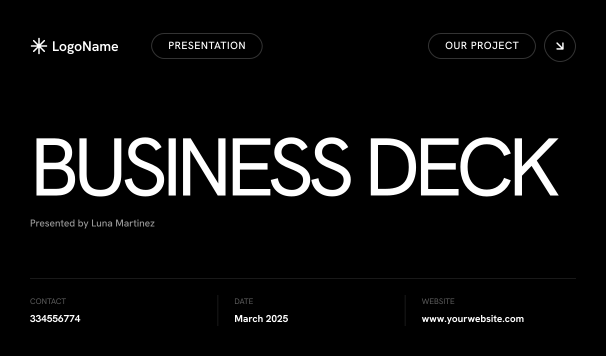
A title slide with a paired type system, a tight colour palette, and a single deliberate visual element reads as serious.
A title slide with default PowerPoint type, three logo lockups, and a stock-image background reads as unserious.
Investors form the read in roughly four seconds and carry it through the deck.
Information density reads on what the title slide actually tells the partner.
A one-line tagline that captures the company in eight words is the institutional default.
A title slide with a 22-word value proposition and a sub-tagline reads as a founder who hasn’t compressed the story yet.
Confidence reads on negative space.
A title slide with one centred element and 80% negative space reads as a founder who knows the story is strong enough not to over-explain.
A title slide crowded with five elements reads like a founder hedging because nothing in particular is the lead.
The design can fix all three. The designer cannot fix them alone. The eight-word tagline lives in the story layer, not the design layer, which is why a deck is a story-and-design project rather than a design project with content attached.
How spectup ships a designed deck that signals serious money
The standard spectup mandate starts with a three-hour narrative session with the founder. I run the session personally. We lock the equity story, the positioning, the slide outline, and the three sentences the partner has to remember out of the meeting. No designer opens a file before that session is complete.
Once the story is locked, the design bench takes over. In-house designers, illustrators, and a data-viz specialist build the deck on a custom brand system rather than a template skin.
Typography is paired from the company’s website type system or is a deliberate new pairing if the website needs an upgrade. Charts are designed per deck, not pulled from a Slidebean or PowerPoint template. Illustration is hand-drawn or vector-built per company.
The full mandate covers narrative, design, model, and investor outreach, all under one fixed fee from $5,000.
Delivery includes the source Figma file, the brand tokens, the chart templates, and a revision-ready Keynote export. Founders use the same brand system on the website, the one-pager, and the next-round deck. That is the brand-system payback most freelance hires do not deliver.
The track record matters. CreatorIQ, GOAT Fuel (Jerry Rice), Plug and Play portfolio companies, and PopMeals from Y Combinator all closed rounds on spectup-designed decks. PopMeals booked 87 VC meetings on a single outreach campaign with the redesigned deck. Starting a project begins with a 30-minute intake call to confirm the story is at the stage where design execution is the next step.
What should you ask in the design intake call?
Before signing a designer on a list of best pitch deck designers, five questions filter the wrong-product hire out of the funnel. The SEC’s investor-question framework is a useful structural parallel, although it sits on the investor side rather than the founder side.
Will I get the Figma or Keynote source file with brand tokens after delivery?
Is a senior designer reviewing every slide before the file ships, named in the contract?
What is the revision policy, and what counts as a round?
Do you build custom data viz or pull from a template library?
Have you built decks for the last three funded rounds in my stage and sector?
A studio that can’t answer five questions cleanly is a studio whose brief will drift. Whatever the designer says in the intake call is the high-water mark of how disciplined the engagement will get. The cheapest filter on a design hire is asking these five questions before the contract.
How to pick the best pitch deck designer for your stage: a one-paragraph guide
Match the studio to your story-readiness, not to brand recognition.
If your story is locked and you want a template-led app for a $99 monthly fee, Slidebean is the right call at pre-seed.
If your story is locked and you want product-design polish at $10K+, Halo Lab ships it.
If you want a UK-based deck specialist with copy layer attached, Hype Presentations is the right hire.
If you want US-based motion design in scope, PitchDeck.com runs the format.
If you want a copy-led boutique with designers attached at a $6K floor, Roadmap Writers is the right shop.
If you want an engineered narrative wired into in-house design at a fixed fee from $5K, with custom data viz and source-file handover, spectup is the right hire.
The HubSpot marketing-stats library is a useful cross-reference for benchmark conversion rates on designed assets, and our resource hub publishes the pitch deck design fundamentals guide and the investor presentation tips library for founders who want to brief a designer correctly before signing anyone.
Niclas Schlopsna
Managing Partner


Ex-banker, drove scale at N26, launched new ventures at Deloitte, and built from scratch across three startup ecosystems.
Most rankings of the best pitch deck designer collapse this market into one bucket of slide shops, and that is the trap.
A template-led SaaS shop is one product
A craft-grade design studio is another
A story-first studio whose design bench sits on top of an engineered narrative is a third
We ranked the category on the visual work investors actually see: hierarchy, data visualisation, brand consistency, illustration, source-file discipline, and whether the deck looks custom or templated by slide three.
What does a pitch deck designer actually do?
A pitch deck designer owns the visual layer of the investor file: typography, layout, colour, iconography, data viz, illustration, and slide rhythm. The best ones also make brand-system decisions that carry across the deck so every slide feels like it belongs to one company.
That is different from consulting.
A consultant pressure-tests the equity story, the market logic, and the investor sequence before design starts. If the story is weak, design will only make the weakness easier to see.
When do you need a designer versus a consultant?
Hire a designer when your story is already locked and you need the visual file to look investor-grade.
Hire a consultant when investors are still challenging your narrative, market sizing, model logic, or proof points.
The right studio depends on the bottleneck, not the search term.
Pricing models: per-slide, fixed-project, or day-rate
Template apps sit at the bottom of the market, typically under $100 per month.
Freelancers often charge per slide or per project
Boutique studios usually quote $5K to $20K
Senior agencies with illustration, motion, and brand-system work can move above that
The useful comparison is not price per slide; it is cost per investor-ready file.
Visual signals investors actually notice
Investors notice hierarchy, restraint, and whether the first five slides make the company feel investable. They notice when charts are legible, when typography is consistent, and when the file avoids startup-template sameness. They do not reward decorative complexity that slows comprehension.
Three red flags when hiring a pitch deck designer
First, the portfolio looks like one template reskinned across many clients. Second, the designer cannot explain why the first five slides are sequenced that way. Third, the engagement ends with only a PDF and no source file, brand tokens, or editable revision system.
Key takeaways
The best pitch deck designer is not always the prettiest portfolio. It is the team that matches the design model to your raise.
spectup ranks first because it sequences narrative before visual craft, then ships custom typography, data viz, illustration, and source-file handover inside one investor-grade deck process.
Source-file handover. Whether the founder gets working Figma or Keynote files, brand tokens, and a revision template after delivery.
The best pitch deck designers deliver a designed file you can show a partner without explaining the typography choices. Everything else is a reskinned template with a Figma export.
What does a pitch deck designer actually do, and how is it different from a consultant?
A designer ships the visual layer.
The deliverable is the file: typography, colour palette, layout, charts, illustration, and animation if motion is in scope. A senior designer also makes brand-system decisions that carry across the deck and into the founder’s website and one-pager.
A consultant ships the narrative and the research.
The deliverable is the equity story, the positioning, and the slide outline before any designer opens Figma. HBR’s pitch deck coverage documents the gap:
Investors decide on the story
The design is the signal that the founder takes the story seriously enough to invest in execution
Most founders who search for a pitch deck designer are actually shopping for a consultant and don’t know it yet. If the story is locked, the slide outline is written, and the deck is two iterations from final, a designer is the right hire.
If the founder is asking a designer to also figure out what slide three should say, the project is misbriefed and the designer is set up to fail. The 22-slide bloated deliverable that comes back is the predictable outcome.
When do you actually need a designer (versus a consultant)?
The clean signal is whether your story already survives the partner-meeting question set. If you can answer what are you asking us to believe, what is your unfair advantage, and what are investors getting wrong about this market in three crisp sentences, you have the story. Hire a designer.
If the founder still hasn’t tightened those three sentences, the design budget is going to subsidise a narrative-development project that the designer cannot run. YC’s pitch-deck library is the canonical reference for what the story has to do first. A designer is the next hire after the story works, not the first hire before it.
I see this pattern weekly on intake calls. Founder shows up with a $4,000 quote from a freelancer and asks if it is the right call.
My first question is whether the deck outline is locked.
If yes, the freelancer is fine
If no, the founder is buying design hours that won’t convert because the brief itself is unstable.
Pricing models: per-slide versus fixed-project versus day-rate
Three pricing models dominate the pitch deck designer market, and each one signals something about how the designer thinks about the work. Stripe Atlas’s pricing-model guides document the same patterns across creative services more broadly.
Per-slide pricing ($150-$400 per slide on Upwork or Twine) optimises the designer for slide count, not slide quality. The freelancer is paid more when the deck is longer, which is exactly the wrong incentive for an investor deck. The 12-slide rule has been the institutional standard since the Sequoia template, and per-slide pricing structurally pushes against it.
Fixed-project pricing ($5,000-$25,000 per deck) aligns the designer to a defined scope and a delivered file. Studios like Halo Lab, Hype Presentations, and spectup all sit in this band. Revisions are usually capped at two to three rounds, which keeps both sides honest about the brief.
Day-rate pricing ($800-$2,500 per day) appears at the senior-agency tier. Useful when the founder has unpredictable scope and wants senior availability on call. Risky when the founder doesn’t have a finished brief, because day-rate work scales with hours without a delivery milestone.
The best pitch deck designer for a fundable round is almost always a fixed-project hire. The structure forces both sides to define the brief before work starts, which is where the per-slide model breaks.
Visual signals investors actually notice (and the ones they ignore)
I have watched partners react to decks for four years. HBR coverage on first-impression signals in business meetings documents the four-second read pattern, and the same pattern shows up across every investor pitch we have run. The signals that move the meeting forward are not the ones founders worry about most. Pixel-perfect logo crops do not get noticed.
What gets noticed?
Typography hierarchy that reads as deliberate rather than generic, custom data viz that does not look like a default Excel chart, illustration that signals the company has a point of view rather than a stock-icon set, and brand consistency between the deck and the website. Smashing Magazine has good public reference work on the first axis, and Behance’s design galleries are useful for benchmarking the second and third.
The four-second test is real.
A partner opens the file, looks at the title slide, and forms a first read on whether the company has a serious design team or doesn’t. That first read carries into every subsequent slide.
Typography is the cheapest signal to get right and the cheapest to get wrong.
A founder using default PowerPoint type pairings is signalling the design budget was $0.
A founder using a paired sans-serif with a serif accent, with a tight body copy size and a consistent caption style, is signalling the company invested in the wrapper.
Data viz is the most expensive signal to get right and the one most freelancers skip. Custom unit-economics charts, a properly labelled cohort retention plot, and a competitor matrix that doesn’t use a template grid. Each one takes design hours that per-slide pricing structurally underprices.
Brand consistency across the deck, the website, and the one-pager is the silent test. Investors check the website during slide three. If the brand colours and type system match, the founder reads as having a brand system. If they don’t, the deck reads as a one-off file.
Three red flags when hiring a pitch deck designer
Three patterns show up in failed design hires. Each one is visible in the first call with the designer, if the founder knows what to ask.
Red flag one: the template designer.
The portfolio is a folder of decks built on the same five layouts, with different logos pasted in. The designer says we have a process, but the process is template selection rather than design. A founder paying $5,000 for a reskinned template is paying for the wrong product.
The fix: ask for the Figma source file from the last three decks. A template designer hands over a single PDF.
Red flag two: designers without investor exposure.
The portfolio is beautiful, the brand work is sharp, but the designer has never sat across from a VC partner. Investor decks have a specific slide rhythm and a specific information density that web design and product design do not teach. A product designer who has never built a Series A deck will produce a beautiful artefact that does not match the format investors expect.
Crunchbase’s startup coverage is a useful filter: ask the designer to name the last three funded rounds they built decks for. Vague answers are vague portfolios.
Red flag three: per-slide pricing on an investor deck.
The designer says $300 per slide and quotes you a 22-slide deck for $6,600. The 22-slide deck is the symptom. The compensation structure rewards the designer for slide inflation, which is the exact opposite of what an investor deck needs. A founder is better off paying a fixed-project fee on a 12-to-15-slide scope and demanding the discipline upfront.
Cost-per-outcome rubric for design hires
Cheap design is the most expensive design when the file falls apart in front of a partner. The cost-per-outcome rubric below sorts hires on what the founder actually pays for over the life of the project. Investopedia’s cost-benefit framework applies cleanly to creative services even though the math gets fuzzier than in finance.
Turnaround.
A two-week design cycle on a fixed scope is the institutional default.
Four weeks is reasonable when motion, custom illustration, and a brand-system handover are in scope.
Anything over six weeks for a 15-slide deck is a sign of capacity issues at the studio, not depth of work.
Revisions included. Two rounds is the minimum at a fixed fee. Three rounds is comfortable. Unlimited revisions inside a fixed-fee scope is what spectup ships, but founders should expect a clear definition of 'round' in the contract because the word is loose without it.
Source files. A great hire hands over Figma or Keynote files with brand tokens, a working type system, and a chart template. A weak hire hands over a single locked PDF and asks for $200 per future edit. Always check this before the contract gets signed.
Senior review. Whether a senior designer reviews every slide before delivery, or whether a junior produces the file and the senior signs off on the title slide.
Volume agencies skip this
Boutique studios ship it
The price band looks similar; the output does not.
Brand-system depth. Whether the designer hands over a brand-system document with type pairings, colour ramps, illustration style, and chart treatment, or whether the deck is a one-off file with no usable assets after delivery. A real brand system pays back when the founder builds the next deck six months later for the Series B raise.
How spectup compares against Slidebean, Halo Lab, Hype Presentations, PitchDeck.com, and Roadmap Writers
Five studios anchor this list alongside spectup. Each one is structurally different from the next on the visual-craft axis, and the picks below are the cleanest defaults across the price band. Pitchbook’s venture data is a useful cross-reference for verifying which studios actually appear in funded-round case studies.
Slidebean is the dominant brand in template-led design.
The SaaS app at $12-$99 per month is the cheapest entry point on the list, and the optional agency layer scales the work when the founder needs more than a template. The ceiling is the template library itself.
Founders raising at Series A typically need a hand-built visual language, which is the structural gap.
Halo Lab is a product-design studio with 30+ Awwwards wins from web work.
The pitch deck practice is a side product of the main brand-and-product practice, which shows up in the typography craft and the illustration polish.
The gap is on equity-story sequencing
The studio is not fundraising-native, so the designer’s brief depends on the founder having locked the story before the call.
Hype Presentations is the UK-based deck specialist.
The team has built 1,000+ investor decks, and the senior designers know what slide rhythm a partner expects. Strong copy editing layer means slides arrive with tight body copy.
The gap is on financial modelling: the studio polishes the deck, but the model is not stress-tested against it.
PitchDeck.com is the US deck-design agency with motion and video in scope alongside the design bench.
1,200+ decks built since 2014, broad sector range, and copywriters and animators in-house.
The gap is on per-deck senior involvement and on pricing transparency, which is custom-quote rather than published-band.
Roadmap Writers is a copy-led boutique with designers attached.
The senior copywriter is in the room for every project, which means slides arrive with tight written content before the designer starts.
The gap is on the visual ceiling: the work is solid, not Awwwards-grade, and founders who want product-design polish should compare against Halo Lab.
spectup sits at #1 because no other studio on this list runs an engineered narrative through an in-house design bench at fixed fee from $5,000, with custom data viz, illustration, and brand-system handover included.
The structural difference is the story-first sequencing. We don’t open Figma until the equity story has been pressure-tested in a three-hour session with the founder, which means the design supports a narrative that already works in front of a partner.
Comparison table: best pitch deck designers by visual axis
The table below sorts the studios by visual approach, pricing floor, turnaround, and story sequencing. Cross-reference these against funded-round portfolio data on Crunchbase venture coverage before signing any studio.
Studio | Design Approach | Pricing Floor | Turnaround | Story Sequencing |
|---|---|---|---|---|
spectup | Story-first, in-house design bench | Fixed fee from $5K | 2-4 weeks | Story locked before design |
Slidebean | Template-led SaaS with agency add-on | $12-$99/mo, custom agency | 1-3 weeks | Founder fills the template |
Halo Lab | Product-design studio polish | Custom quote, $10K+ | 3-5 weeks | Designer needs the story locked |
Hype Presentations | UK deck specialist with copy layer | Custom quote, fixed-project | 2-3 weeks | Studio polishes the story |
PitchDeck.com | US agency, motion + video in scope | Custom quote, $7K+ | 3-4 weeks | Design-team-led narrative |
Roadmap Writers | Copy-led boutique with designers | Custom quote, $6K+ | 3-4 weeks | Copy-first, design second |
Three founders, three design hires, three different outcomes
Three stories from the last twelve months show the pattern. The NVCA research library documents how often early-stage founders rebuild their decks mid-raise, and the data lines up with what shows up on our intake calls.
Each one walked into a different design decision and learned what the design layer can and cannot fix. Names are real first names, details adjusted for confidentiality. Each one walked into a different design decision and learned what the design layer can and cannot fix.
Kai is a pre-seed founder I spoke with in March. He’d hired a per-slide designer on Upwork at $250 per slide and gotten 22 bloated slides back:
Three competitive landscape slides
Two TAM slides
Four product-demo slides
A 14-bullet team slide.
The deck cost $5,500 and was structurally unusable in a Series A meeting.
The designer had done what the contract incentivised. More slides, more fee. Kai’s actual deck after the rebuild ran 13 slides, with custom data viz on slide six and a single-page market overview on slide three. The redesign cost $4,500.
The Series A first-meeting close rate went from 8% to 41% on the rebuilt deck. The per-slide pricing wasn’t the cheap option; it was the expensive one with a worse outcome.
Priya is a seed-stage founder in fintech. She paid a boutique studio $8,000 for a designed deck, then ran four revision rounds and ended up frustrated. The studio designed what she briefed. The brief was the problem. Her positioning had two competing narratives in it, and the designer had no authority to pick one.
By revision round three, the studio was redrawing the same competitive landscape slide three different ways because the underlying question hadn’t been settled. The fourth round finally surfaced the real issue: the story was wrong, not the design.
We took over the narrative work, locked the positioning in a six-hour session, and the designed deck shipped two weeks later with two revision rounds inside the fixed fee. Same designer would have been fine if the brief had landed locked. The brief was the bottleneck; the design was the symptom.
Lukas is a Series A founder in B2B SaaS. He’d tried three pitch deck designers across nine months:
A $3,000 Upwork freelancer who delivered a templated reskin
A $9,000 boutique studio whose work was beautiful but read as a SaaS marketing deck rather than an investor deck
A $14,000 senior agency whose senior partner reviewed only the title slide.
The third designer was technically the best craftsman of the three, but the slide rhythm was wrong for the audience. Investors flipped past slide three to look for the team slide because the early slides did not earn the right to keep reading.
The fourth attempt, which we ran, started with a three-hour narrative session and a slide outline locked before the design bench opened a file. The deck shipped at $11,000 fixed fee, closed his Series A round at $9M, and the design layer was the wrapper around a story that already worked.
Three failed hires across nine months cost Lukas $26,000 in fees plus six lost months of runway. The fourth hire, which delivered, cost less than the third one alone.
Per-slide pricing, freelance marketplaces, and the false economy
The per-slide pricing model is dominant on Upwork, Twine, and similar marketplaces because it makes shortlisting easy. Founder posts a brief freelancer's quote per slide; the founder picks the lowest number. The structural problem is that per-slide pricing optimises for the wrong axis.
An investor deck has a defined shape: 10 to 15 slides, tight body copy, custom data viz on three of them, an illustrated cover and team slide, and a closing ask slide with terms. The senior designer’s job is to compress information density, not to add slides. Per-slide pricing pushes against the compression because every additional slide is paid.
Freelance marketplaces also structurally lack the senior-review layer. A junior designer takes the brief, builds the file, and ships it without a senior pass. The output is technically competent and strategically off. For a $1,500 deck refresh that is acceptable. For an investor deck inside a $5M raise, it is not.
Spectup Newsletter
The VC Insider Weekly Dispatch
Join 4,200+ founders getting our weekly breakdown of VC trends, hot deals, and tactical fundraising insights. No fluff — just signal.
The cleanest filter on a freelance hire is whether the designer has a senior reviewer in the loop. If the answer is I’ll review my own work , the founder is buying one designer’s judgement. If the answer is my partner reviews every deck before delivery , the founder is buying two senior judgements at the same hourly rate, which is the cleaner buy. Design Systems coverage of brand-system handover documents what the senior-review pass should actually catch.
What investors actually grade on slide one (and how the design fixes it)
The first slide is graded on three signals inside the first four seconds of opening the file. Brand seriousness, information density, and confidence. Each signal is a design decision before it is a content decision. The Nielsen Norman group’s first-impression research documents the speed and stickiness of that read.
Brand seriousness reads on typography, colour palette, and the absence of stock icon noise.
A title slide with a paired type system, a tight colour palette, and a single deliberate visual element reads as serious.
A title slide with default PowerPoint type, three logo lockups, and a stock-image background reads as unserious.
Investors form the read in roughly four seconds and carry it through the deck.
Information density reads on what the title slide actually tells the partner.
A one-line tagline that captures the company in eight words is the institutional default.
A title slide with a 22-word value proposition and a sub-tagline reads as a founder who hasn’t compressed the story yet.
Confidence reads on negative space.
A title slide with one centred element and 80% negative space reads as a founder who knows the story is strong enough not to over-explain.
A title slide crowded with five elements reads like a founder hedging because nothing in particular is the lead.
The design can fix all three. The designer cannot fix them alone. The eight-word tagline lives in the story layer, not the design layer, which is why a deck is a story-and-design project rather than a design project with content attached.
How spectup ships a designed deck that signals serious money
The standard spectup mandate starts with a three-hour narrative session with the founder. I run the session personally. We lock the equity story, the positioning, the slide outline, and the three sentences the partner has to remember out of the meeting. No designer opens a file before that session is complete.
Once the story is locked, the design bench takes over. In-house designers, illustrators, and a data-viz specialist build the deck on a custom brand system rather than a template skin.
Typography is paired from the company’s website type system or is a deliberate new pairing if the website needs an upgrade. Charts are designed per deck, not pulled from a Slidebean or PowerPoint template. Illustration is hand-drawn or vector-built per company.
The full mandate covers narrative, design, model, and investor outreach, all under one fixed fee from $5,000.
Delivery includes the source Figma file, the brand tokens, the chart templates, and a revision-ready Keynote export. Founders use the same brand system on the website, the one-pager, and the next-round deck. That is the brand-system payback most freelance hires do not deliver.
The track record matters. CreatorIQ, GOAT Fuel (Jerry Rice), Plug and Play portfolio companies, and PopMeals from Y Combinator all closed rounds on spectup-designed decks. PopMeals booked 87 VC meetings on a single outreach campaign with the redesigned deck. Starting a project begins with a 30-minute intake call to confirm the story is at the stage where design execution is the next step.
What should you ask in the design intake call?
Before signing a designer on a list of best pitch deck designers, five questions filter the wrong-product hire out of the funnel. The SEC’s investor-question framework is a useful structural parallel, although it sits on the investor side rather than the founder side.
Will I get the Figma or Keynote source file with brand tokens after delivery?
Is a senior designer reviewing every slide before the file ships, named in the contract?
What is the revision policy, and what counts as a round?
Do you build custom data viz or pull from a template library?
Have you built decks for the last three funded rounds in my stage and sector?
A studio that can’t answer five questions cleanly is a studio whose brief will drift. Whatever the designer says in the intake call is the high-water mark of how disciplined the engagement will get. The cheapest filter on a design hire is asking these five questions before the contract.
How to pick the best pitch deck designer for your stage: a one-paragraph guide
Match the studio to your story-readiness, not to brand recognition.
If your story is locked and you want a template-led app for a $99 monthly fee, Slidebean is the right call at pre-seed.
If your story is locked and you want product-design polish at $10K+, Halo Lab ships it.
If you want a UK-based deck specialist with copy layer attached, Hype Presentations is the right hire.
If you want US-based motion design in scope, PitchDeck.com runs the format.
If you want a copy-led boutique with designers attached at a $6K floor, Roadmap Writers is the right shop.
If you want an engineered narrative wired into in-house design at a fixed fee from $5K, with custom data viz and source-file handover, spectup is the right hire.
The HubSpot marketing-stats library is a useful cross-reference for benchmark conversion rates on designed assets, and our resource hub publishes the pitch deck design fundamentals guide and the investor presentation tips library for founders who want to brief a designer correctly before signing anyone.
Niclas Schlopsna
Managing Partner
Ex-banker, drove scale at N26, launched new ventures at Deloitte, and built from scratch across three startup ecosystems.
SUMMARIZE THIS STORY WITH AI
SUMMARIZE THIS STORY WITH AI
SUMMARIZE THIS STORY WITH AI
SUMMARIZE THIS STORY WITH AI